
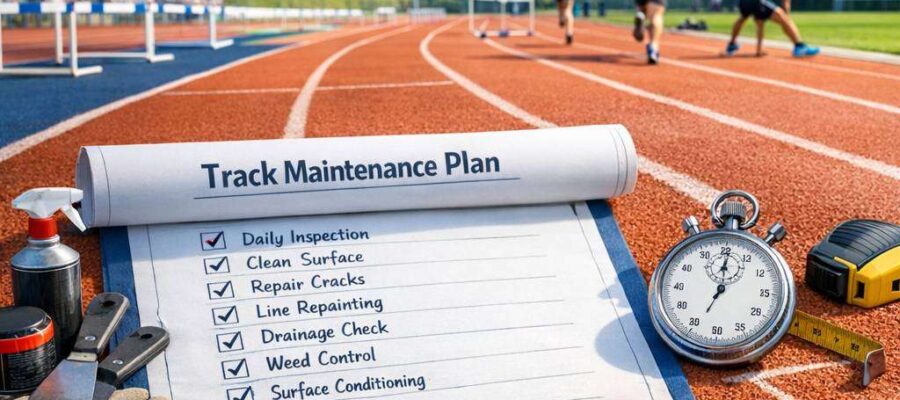
Maintaining a high-performance running surface requires a disciplined regime that balances safety, performance, and longevity. As an expert in sports facility upkeep, I distill the most effective practices into ten essential recommendations. These practices are applicable to standard athletics tracks, including synthetic surfaces, tartan tracks, and modern rubberised materials. The goal is to ensure consistent track performance while extending its life through careful routine care and timely interventions.
1. Establish a Structured Cleaning Schedule
A regular, well-documented routine is the cornerstone of athletic track maintenance. Implement daily, weekly, and monthly tasks that prioritise field debris removal, surface drying, and microbial control. An athletic track cleaner equipped with appropriate brushes and low-pressure equipment can efficiently remove dust, leaves, and grit, reducing abrasive wear. Document every cleaning session, noting ambient conditions and any irregularities in surface texture or colour.
2. Prioritise Surface Debris Management
Nothing compromises grip and safety like embedded debris within the running surface. Implement a two-tier approach: remove loose debris with a specialised brooms or sweepers, and clear occasional compaction by hand inspection of the far lane edges and start zones. For heavy debris or after storms, schedule a thorough sweep with a tactically positioned scraper bar to avoid scuff marks while preserving traction.
3. Optimise Athletic Track Cleaning Techniques
Cleanliness is more than appearance; it directly affects performance. Use non-abrasive cleaning methods and products specifically designed for synthetic tracks. Avoid harsh solvents or high-residue cleaners that may degrade binders or reduce surface elasticity. When water is appropriate, use controlled mist or rinse, ensuring runoff does not pool in lane lines or transition zones. The right combination of suction and brushing improves longevity by minimising surface wear.
4. Monitor Drainage and Water Management
Efficient drainage is essential to prevent surface deterioration and microbial growth. Inspect drainage channels, outlet grates, and surrounding turf for blockages. After rain, ensure the surface dries evenly and promptly. If standing water persists, investigate sub-surface drainage and report potential failures for timely repair. Proper water management supports consistent pitch and grip, reducing the likelihood of edge fray and delamination of boundary lines.
FAQ: Athletic Track Maintenance
What is athletic track maintenance and why is it important?
Athletic track maintenance encompasses all activities required to keep a running track in safe, optimal condition—surface cleaning, inspection, repairs, and resurfacing as needed. Regular maintenance reduces injury risk, preserves performance characteristics, extends the track’s lifespan, and ensures compliance with governing body standards.
How often should an athletic track be inspected?
Conduct a routine visual inspection at least weekly during the competitive season, with a more thorough monthly check. After severe weather or events, perform an immediate inspection to identify damage such as cracks, surface wear, or drainage issues.
What are common components of an athletic track that need maintenance?
- Surface (rubberized or polyurethane layers)
- Lane markings and finish lines
- Drainage systems and silt traps
- Turf adjacent areas and grass edging
- In-fill materials and adhesion between layers
- Accessories (start blocks, hurdles, lane ropes)
- Edges and curbs for track boundaries
How should surface cleaning be performed?
Remove debris with a soft-bristle broom or blower; wash the surface with a park-safe, non-residue cleaning solution if necessary; avoid high-pressure washing that could damage the surface. Ensure drainage is clear and restore traction by maintaining proper abrasive texture as per manufacturer guidelines.
When is resurfacing required?
Resurfacing is typically considered when surface wear exceeds wear depth recommendations, significant cracking or rutting appears, or friction properties fall outside manufacturer or federation standards. This often occurs every 8–12 years for heavily used tracks, but varies by climate, usage, and material.
How can I protect a track from weather-related damage?
- Ensure proper drainage and slope to prevent standing water
- Use covers during heavy rain or frost periods
- Schedule maintenance during mild, dry conditions
- Address tree debris and shading that can accelerate UV degradation
- Apply UV protectants only as recommended by the surface manufacturer
What routine maintenance tasks can I perform in-house?
- Weekly debris removal and sweeping
- Visual inspection for cracks, peeling, or loose edges
- Reapplying or repainting lane markings as needed
- Tightening or replacing loose hardware around edges
- Checking drainage inlets and clearing any blockages
Should I hire a professional for track maintenance?
Yes, for complex tasks like resurfacing, significant crack repairs, drainage redesign, or any work involving structural integrity and specific materials. Professionals ensure compliance with standards from bodies like the IAAF/World Athletics or national athletics associations and guarantee proper curing times and warranties.
What questions should I ask a maintenance contractor?
- What track surface material do you install and maintain, and what are the warranty terms?
- Can you provide a written maintenance plan with frequency and testing methods?
- How do you assess friction, bounce, and drainage performance?
- What are your safety protocols and environmental considerations?
- Can you provide references or case studies from similar facilities?
How do I verify track surface friction and safety?
Have a qualified technician conduct friction testing using a portable friction tester according to manufacturer guidelines and federation standards. Regularly track results to monitor wear, and maintain records for audits or compliance checks.
How often should markings be refreshed?
Lane markings typically require refreshment when they fade beyond visibility or when resurfacing is performed. In high-use venues, expect markings renewed every 2–4 years, or as recommended by the surface and governing body guidelines.
What role does drainage play in maintenance?
Effective drainage prevents puddling, reduces surface wear, and lowers the risk of surface deterioration. Regularly inspect and clear catch basins, translate depressions, and ensure grading slopes are consistent with installation specifications.
Are there environmental considerations I should follow?
Yes. Use eco-friendly cleaning agents, manage runoff to prevent pollution of nearby water sources, and comply with local regulations on chemical use and disposal. Consider heat and UV exposure in design to minimise long-term environmental impact.
How can I extend the life of an athletic track?
- Follow a scheduled maintenance plan with professional inspections
- Address damage early to prevent propagation
- Maintain proper drainage and clean regularly
- Use authorised products and adhere to manufacturer guidelines
- Limit heavy equipment traffic on the surface and designate access routes
What is the typical cost range for maintenance?
Maintenance costs vary by region, surface type, and scope of work. Routine in-house maintenance is relatively low cost, while resurfacing or major repairs can be a significant investment. Request quotes from multiple qualified contractors and compare with long-term lifecycle costs.
5. Schedule Progressive Running Track Cleaning Between Events
Between events or training blocks, perform a lightweight intervention to restore surface presentation without impeding usage. Remove chalk residues from sprint lanes and wipe down the perimeter with a damp cloth to remove trace contaminants. This prevents chemical residues from interacting with rubber granules and maintains uniform tackiness. A light, routine refresh keeps the surface consistent for upcoming sessions.
6. Implement Preventative Surface Treatments
Consider periodic, approved maintenance products that are compatible with your track’s composition. Light surface brightening or conditioning can help maintain uniform appearance and prevent micro-cracking from ultraviolet exposure. Always verify compatibility with the manufacturer’s guidelines and conduct a small test in a discreet area before widespread application. Avoid over-treatment which can alter friction characteristics and risk grip variability.
7. Conduct Regular Inspections for Wear and Damage
A proactive inspection programme helps identify wear patterns, seam lifting, or ballast displacement early. Focus on seams, transition zones, lane markings, and starting blocks. Look for blistering, creasing, or delamination of surface layers. Document findings with photos, dates, and remedial actions. Early intervention minimises the need for more extensive running track repair and keeps downtime to a minimum.
8. Manage Lane Markings and Surface Integrity
Lane markers subject surfaces to repeated tape adhesion and removal cycles. Ensure markings are intact and legible, with clean edges and consistent spacing. When tape or paint shows significant wear, coordinate with a qualified contractor to reline lanes, ensuring compatibility with the surface’s adhesive system. Properly maintained markings contribute to fair competition and reduce edge wear from misaligned blocks or lane lines.
9. Plan for Seasonal Maintenance and Repairs
Seasonal cycles—especially winter months or extended wet periods—demand a strategic maintenance plan. Schedule deep cleans and targeted repairs during low-demand windows. For minor cracks or micro-damage, use approved patching compounds and allow ample cure time before reintroducing heavy use. For structural concerns or substantial damage, engage specialist contractors with proven track repair credentials to perform resurfacing or overlay work as required.
Athletic track maintenance is essential for safety, performance, and longevity. Regular inspections, surface cleaning, and timely repairs prevent hazards and extend track life. Use proper equipment and follow manufacturer guidelines to maintain grip and consistency across lanes. Cost-effective maintenance reduces downtime and improves athlete confidence. For more information and resources, visit https://www.artificialgrassmaintenance.co.uk in the second half.
10. Engage with Qualified Professionals for Running Track Repairs
Running track repair, when needed, should be undertaken by skilled technicians with experience in synthetic track systems. They can assess substrate stability, binder integrity, and surface porosity, recommending repairs that restore uniform performance. Maintain a log of all repairs, dates, contractors, and materials used. This historical record supports ongoing maintenance planning and ensures traceability for facility managers and sporting bodies.
In summary, thoughtful athletic track maintenance combines disciplined cleaning, vigilant inspection, environmental management, and timely, professional repairs. By following these ten essential practices, you can prolong both performance and longevity, delivering a safe and reliable surface for athletes, coaches, and events alike. Whether you are hiring an athletic track cleaner or coordinating via internal staff, a structured approach to running track cleaning and maintenance will yield measurable, enduring benefits.