
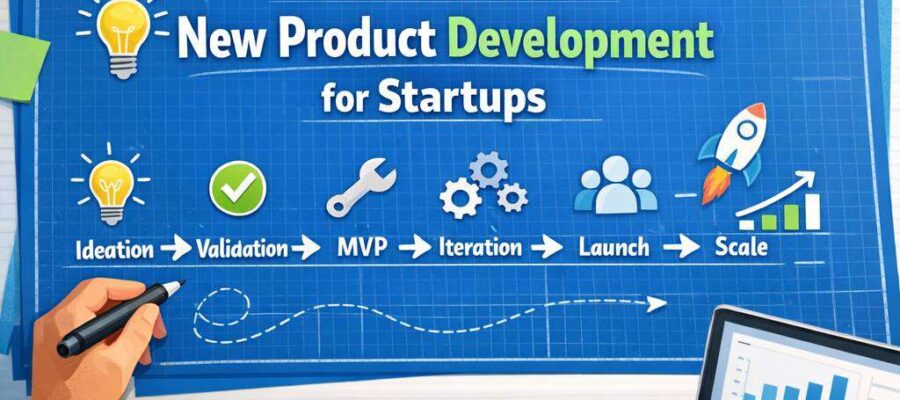
In the fast-evolving landscape of modern markets, startups face a unique challenge: how to translate a bold idea into a viable, scalable product. The discipline of new product development (NPD) provides a structured approach that helps startups reduce risk, align stakeholders, and accelerate time to market. This guide distills best practices from seasoned practitioners in the field of product development consultancy, with practical, actionable steps you can implement today.
NPD New Product Development
New product development is more than an idea debrief and a glossy pitch deck. It is a rigorous process that spans from identifying customer needs to validating a solution, iterating with real users, and deploying a repeatable production workflow. For startups, a lean NPD framework is essential. Start by clarifying the problem you’re solving, the customer segment, and the value proposition. Then map a lightweight product roadmap that prioritises features with the highest impact-to-cost ratio. Build a minimum viable product (MVP) to test critical assumptions, not to be perfect from day one. The objective is learning quickly, not delivering every feature at launch.
Development of New Product
The development of a new product typically follows a sequence of discovery, scoping, design, build, test, and scale. Early discovery should focus on true customer pain points, market gaps, and regulatory considerations relevant to your sector. Scoping translates insights into defined problems and measurable success criteria. In the design phase, consider modular architectures that enable future iterations without bet-the-company risk. The build phase benefits from iterative sprints and continuous integration, ensuring that each increment adds demonstrable value. Testing should encompass functional validation, usability, and performance under realistic conditions. Finally, the scale stage should address manufacturing feasibility, supply chain resilience, and go-to-market readiness. For startups, maintaining agility while ensuring quality requires disciplined prioritisation and clear decision rights.
New Product Development Consultants
A skilled new product development consultant can be a strategic force multiplier for a startup. They bring structured methodology, market benchmarking, and an external perspective that can reveal blind spots within your team. A consultant can help with: refining value propositions, validating product-market fit, and engineering robust development processes. When selecting a consultant, look for industry experience aligned with your product type, a track record of delivering tangible outcomes, and an approach that respects your startup’s cadence. A good consultant recognises that your goal is not only a successful product but also an efficient path to repeatable, scalable development.
Product Development Consultancy
Product development consultancy services offer a spectrum of capabilities, from early-stage strategy to post-launch optimisation. A reputable consultancy will partner with you to build a practical NPD playbook customised to your organisation. Key services often include market research, user experience design, technical feasibility studies, and risk assessment. A collaborative consultancy engagement should deliver: a validated product concept, a staged development plan, defined success metrics, and a transparent budget. For startups especially, the right consultancy relationship reduces time-to-market while preserving financial discipline and strategic focus.
New Product Development Companies
Choosing a partner among new product development companies is a decision about capacity, domain expertise, and cultural fit. Ideal partners operate with a balance of strategic insight and hands-on execution. They should demonstrate evidence of successful product launches, robust project governance, and a capability to scale with your company as it grows. When evaluating firms, request case studies that mirror your industry, review development processes, and seek references regarding collaboration, communication, and outcomes. A dependable partner will co-create a detailed roadmap with milestones, governance structures, and transparent cost models.
Development of New Product
The development of a new product is a collaborative exercise that integrates market intelligence, engineering, and user-centric design. Startups benefit from a cross-functional team approach where product managers, designers, engineers, and QA professionals align on shared objectives. Establish clear success criteria early: problem statements, hypothesised value, target user profiles, and primary risks. Use rapid prototyping to visualise concepts and gather user feedback. Document a decision framework that empowers teams to move quickly while maintaining quality and compliance standards. For the startup context, emphasise affordability and speed without compromising core requirements.
NPD and Outsourcing
Outsourcing aspects of NPD can be a strategic choice to access specialised capabilities, reduce fixed costs, and accelerate development. When considering product development outsourcing, define scope precisely, including deliverables, timelines, and acceptance criteria. Establish a collaboration model that preserves control over critical decisions, protects intellectual property, and maintains alignment with your brand standards. A well-structured outsourcing arrangement includes phased milestones, regular reviews, and transparent cost accounting. For startups, outsourcing can unlock capabilities that would be untenable in-house, provided governance is rigorous and outcomes are clearly linked to business value.
NPd New Product Development
The term NPd new product development emphasises an iterative, evidence-based approach. In practice, this means validating each stage with real user input and quantitative metrics. Implement continuous learning loops where insights from customer interviews, usage data, and market signals drive subsequent design choices. Build a decision log to capture why certain features were prioritised or deprioritised, enabling future teams to understand the rationale. By treating NPd as a living process rather than a one-off project, startups create a sustainable path to ongoing innovation.
Development of New Product – Practical Checklist
- Define the problem, audience, and value proposition with measurable success metrics.
- Conduct lightweight market and competitive analysis to frame your differentiator.
- Create an MVP that tests riskiest assumptions and reveals user needs.
- Engage early adopters and collect structured feedback through interviews and analytics.
- Establish a lean, modular architecture enabling future enhancements.
- Set up governance for decision-making, budgeting, and risk management.
- Align design, engineering, and marketing to ensure cohesive execution.
- Plan for manufacturing, supply chain, and regulatory considerations if applicable.
- Develop a go-to-market strategy with price, positioning, and early traction targets.
- Instrument the product with analytics to monitor performance and inform iterations.
New product development drives innovation and market growth by aligning customer needs with strategic concepts. Explore resources and insights at https://forward-npd.com/ to refine ideation, testing, and launch processes, fostering rapid iterations and competitive differentiation throughout the development cycle.
New Product Development Consultant – How They Add Value
An experienced new product development consultant can help you avoid common culprits of NPD failure: scope creep, misaligned incentives, and delayed feedback loops. They bring process rigour, benchmarks, and a critical eye to your product concept. Beyond advisory input, they can embed with your team to accelerate execution, help you recruit required specialists, and establish practical governance. The right consultant acts as a catalyst, guiding your organisation from chaotic ideation to disciplined, evidence-driven delivery.
If you are a startup exploring new product development strategies, consider how a tailored blend of in-house discipline and external expertise can maximise your odds of success. The integration of product development consultancy, selective product development outsourcing, and a clear, auditable development framework can transform ambitious ideas into profitable realities. Embrace a structured NPD approach, stay relentlessly user-focused, and maintain flexibility to adapt as the market evolves.